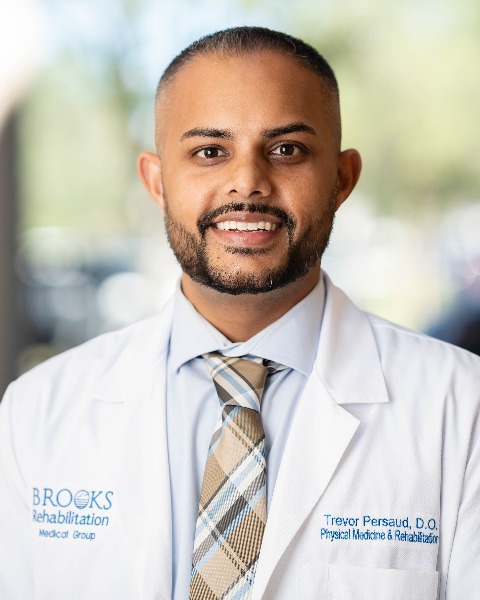
Medical Director of Brain Injury Rehabilitation Brooks Rehabilitation
Brief Session Description : This intermediate-level lecture explores the use of vagus nerve stimulation (VNS) paired with rehabilitation to improve upper extremity recovery in chronic ischemic stroke survivors. Attendees will review neuroplasticity mechanisms, key clinical trial evidence, patient selection, and implementation strategies. Interactive polling and case-based discussions will engage participants in applying evidence to practice. The session offers new, evidence-based knowledge on an FDA-approved therapy that extends recovery potential beyond the traditional rehabilitation window, encouraging reflection on how VNS can be integrated into clinical care to enhance functional outcomes for stroke survivors.
Session Objectives:
Describe the mechanism of action of vagus nerve stimulation (VNS) and its role in promoting neuroplasticity following ischemic stroke.
Summarize key evidence from clinical trials (e.g., VNS-REHAB and VNS-CHRONIC) supporting the use of paired VNS therapy for improving upper extremity motor function in chronic stroke survivors.
Identify appropriate patient selection criteria and contraindications for VNS implantation in individuals with chronic upper limb impairments post-stroke.
Outline the typical rehabilitation protocol used in conjunction with VNS therapy, including stimulation parameters and task-based training approaches.
Interpret common clinical outcome measures (e.g., Fugl-Meyer Upper Extremity, Wolf Motor Function Test) used to evaluate VNS treatment efficacy.
Discuss the safety profile, potential complications, and long-term considerations of VNS therapy in the stroke population.